
The Patio de los Naranjos
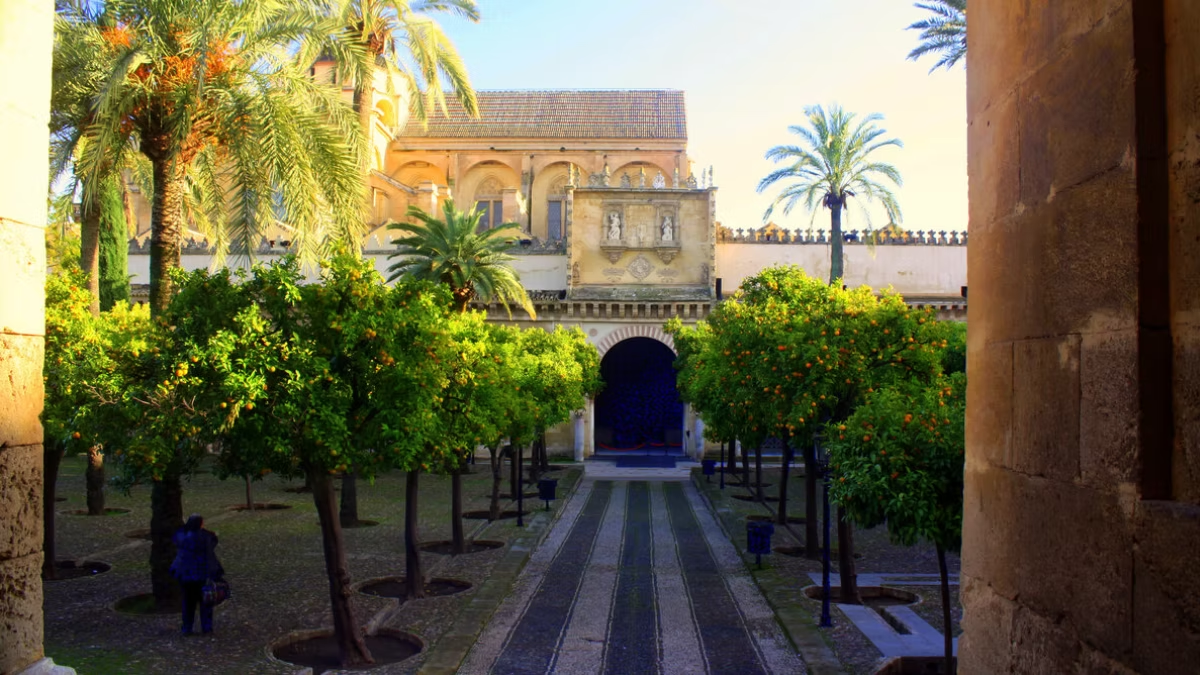
The Patio de los Naranjos (Orange Tree Courtyard) is the large open courtyard on the north side of the Mezquita-Córdoba. It is free to enter at any time during daylight hours, with no ticket required. Originally the mosque’s ablutions courtyard where worshippers washed before prayer, it is now planted with rows of orange, palm, and cypress trees arranged in geometric patterns aligned with the columns of the prayer hall inside.
Before you enter the Mezquita proper, you pass through the Patio de los Naranjos. Most visitors spend a few minutes here on their way in and out. That is worth reconsidering. The courtyard is one of the oldest walled gardens in the Islamic world, it connects directly to over a thousand years of religious practice on this site, and the view from its southern portico — looking back towards the Bell Tower and down the rows of orange trees — is one of the most satisfying compositions in Córdoba.
History and Significance
The courtyard originated as the sahn — the outdoor precinct of the mosque where worshippers performed ritual ablutions before prayer. It was created alongside the first phase of the mosque under Abd al-Rahman I in the late 8th century and expanded with each subsequent phase of construction.
During the height of the Caliphate of Córdoba in the 10th century, the courtyard also served as a place of teaching, legal consultation, and public gathering. It was effectively the civic forecourt of the most important building in Europe’s most powerful city.
The name “Patio de los Naranjos” — Courtyard of the Orange Trees — dates from the Christian period. The original trees planted during the Islamic era were palms; the orange trees were introduced progressively from the 15th century onwards and became the defining feature of the courtyard’s appearance. The trees are planted in rows that align precisely with the columns of the prayer hall inside, creating a visual and geometric continuity between the outdoor and indoor spaces.
The courtyard is enclosed by the outer walls of the Mezquita complex on three sides and by the south portico (through which you enter the prayer hall) on the fourth. The Puerta del Perdón (Gate of Forgiveness) on the north wall is the main public entrance to the courtyard from Calle Cardenal Herrero and serves as the primary ceremonial gateway to the entire Mezquita complex.
What to See
The Orange Trees
The rows of orange trees — bitter Seville oranges, not the sweet variety — are planted in a geometric grid that mirrors the column grid of the prayer hall. Walking north-south through the courtyard, you can look south through the trees and through the open doors of the prayer hall and see the columns continuing the same rhythm indoors. This alignment is deliberate and is one of the most visually striking spatial effects in the complex.
The trees bloom in late winter and early spring, filling the courtyard with the heavy, sweet scent of orange blossom. In late summer, the fruit hangs orange and heavy on the branches. The courtyard has an almost domestic quality at these times — intimate despite its size.
The Fountains
Three Renaissance-era fountains run along the north-south axis of the courtyard. They replaced the original Islamic ablutions channels and serve the same practical purpose: water for ritual purification before entering the sacred space. The sound of running water in the courtyard is continuous during opening hours and contributes significantly to the courtyard’s atmosphere.
The Bell Tower
The Torre Campanario rises from the northwest corner of the courtyard and is the most visible structure in Córdoba’s skyline. Entered from outside the courtyard through the Patio de San Eulogio, it requires a separate timed ticket (€3) but offers panoramic views of the Mezquita’s roofline and the city beyond. See our dedicated Bell Tower guide for everything about the climb.
The Puerta del Perdón
The Gate of Forgiveness on the north wall, facing Calle Cardenal Herrero, is the main ceremonial entrance to the courtyard. It is a 14th-century Mudéjar gate — built in the Islamic architectural style by Christian craftsmen — and is one of the finest examples of Mudéjar work in Córdoba. The gate’s name refers to the tradition of granting pardons to criminals who reached it.
The Portico
The south end of the courtyard is bounded by a covered portico — a colonnaded walkway that originally served as the transition space between the outdoor ablutions area and the prayer hall. Original carved wooden ceiling panels from the Islamic period are preserved in sections of the portico wall and are among the oldest surviving wooden elements of the mosque.
Practical Information
The Patio de los Naranjos is free to enter at any time during daylight hours, with no ticket required. Entry is from Calle Cardenal Herrero through the Puerta del Perdón or through the Puerta de Santa Catalina on the north side. The courtyard is accessible even when the paid visitor areas of the Mezquita are closed, making it a useful free stop at any time of day.
The ticket office for the Mezquita (Patio de San Eulogio) is on the north side of the courtyard complex, just inside the perimeter wall. The Bell Tower entrance is adjacent to it.
The courtyard is the meeting point for most guided tours, which typically begin here with an introduction before entering the prayer hall. If you have booked a guided tour, look for the meeting point instructions in your confirmation — most tours specify a particular fountain or gate.
During the free morning entry window (08:30–09:20, Monday to Saturday), the courtyard and the prayer hall are both accessible at no cost. The Patio de los Naranjos makes an excellent starting point for this session, particularly for photography in the early morning light.
Frequently Asked Questions
Is the Patio de los Naranjos free to enter?
Yes. The Orange Tree Courtyard is free to enter at any time during daylight hours. No ticket is required.
What are the trees in the Patio de los Naranjos?
Bitter Seville orange trees, planted in rows geometrically aligned with the columns of the prayer hall inside. Palm trees and cypresses are also present.
Can you access the prayer hall from the Patio de los Naranjos?
Yes, through the doors in the south portico — but these require a valid entry ticket. The courtyard itself is free; the interior of the prayer hall is not.
When do the orange trees bloom?
Late winter and early spring, typically February to March. The heavy scent of orange blossom fills the courtyard during this period.
What is the Puerta del Perdón?
The Gate of Forgiveness is the main ceremonial entrance gate on the north wall of the courtyard, facing Calle Cardenal Herrero. It is a fine example of 14th-century Mudéjar architecture.
Is the Patio de los Naranjos the same as the Patio de San Eulogio?
No. The Patio de San Eulogio is the name of the Information and Reception Centre on the north side of the Mezquita complex, where tickets are sold. The Patio de los Naranjos is the historic orange tree courtyard itself.
Can I enter the Patio de los Naranjos at night?
The courtyard is accessible during daylight hours. The Soul of Córdoba night tour begins in the courtyard, but outside of that scheduled experience the courtyard closes at the same time as the monument.
