
Mezquita-Córdoba Map
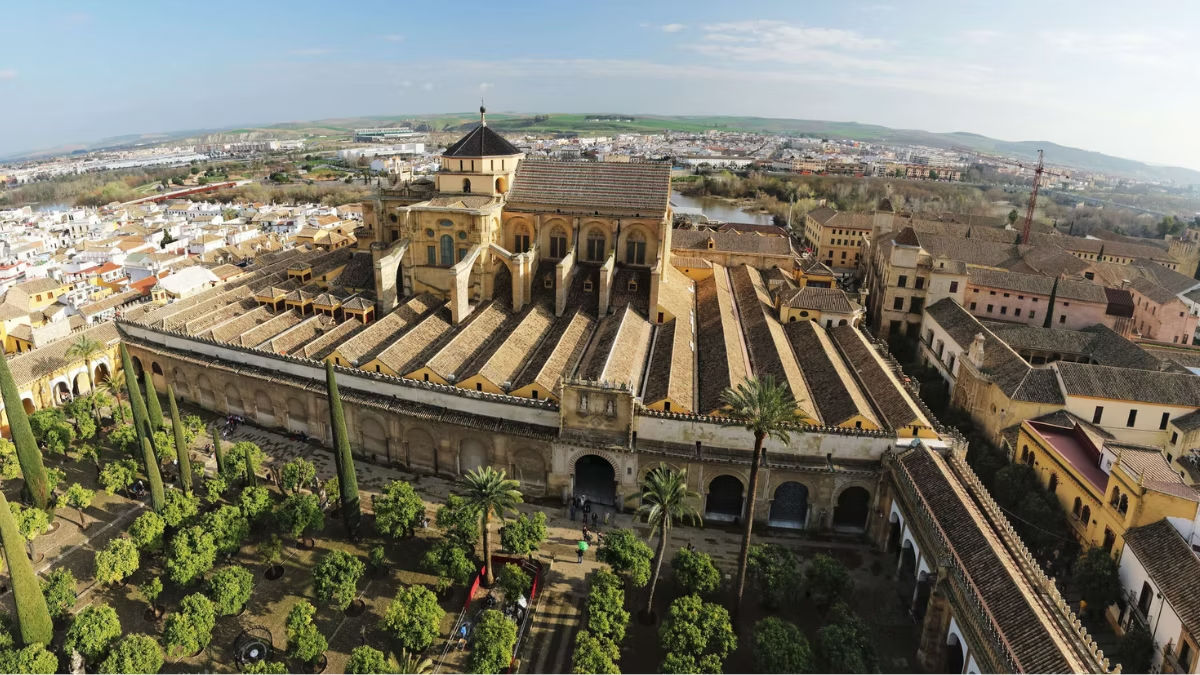
The Mezquita-Córdoba is located at Calle Cardenal Herrero, 1, 14003 Córdoba. The main paid visitor entrance is the Puerta de los Deanes on Calle Torrijos. The ticket office (Patio de San Eulogio) is on the north side of the building. The nearest bus stop is Puerta del Puente, 3 minutes’ walk. The Patio de los Naranjos is free to enter from Calle Cardenal Herrero at any time.
Navigating the area around the Mezquita is straightforward once you know the layout — but the historic old town’s narrow, winding streets can be disorienting if you arrive without a mental map. This guide covers the key landmarks, entrances, transport stops, and nearby attractions to orient your visit.
The Mezquita’s Location
The Mosque-Cathedral of Córdoba sits in the southwest corner of the historic old town, with the Guadalquivir River running immediately to its south and the Jewish Quarter (Judería) to its north and west. The Roman Bridge is 200 metres to the south. The Bell Tower — 54 metres tall and the highest point in the city — is visible from much of the surrounding area and serves as a natural navigation aid.
Address: Calle Cardenal Herrero, 1, 14003 Córdoba
The Mezquita’s footprint is large — approximately 180 m × 130 m — and is enclosed by a continuous outer wall with multiple gates on all four sides. The building occupies an entire city block.
Entrances and Gates
Understanding which entrance to use avoids confusion, particularly on busy days when different visitor queues form at different points.
Puerta de los Deanes (Calle Torrijos) — the main paid visitor entrance for standard ticket holders and guided tour groups. This is the primary entry point and where the main queue forms. It is also used for the free morning entry window.
Patio de San Eulogio (north side, Calle Cardenal Herrero) — the Information and Reception Centre, where on-site same-day tickets are sold and where the official ticket check-in operates for pre-booked online tickets. The Bell Tower entrance is also accessed from here.
Puerta del Perdón (Calle Cardenal Herrero) — the main historical gate into the Patio de los Naranjos, opening directly onto the Orange Tree Courtyard. This entrance is free and open during daylight hours without a ticket. Several guided tours use this gate as their meeting point.
Puerta de Santa Catalina — secondary gate into the Patio de los Naranjos from the north side.
For the Soul of Córdoba night tour, the entrance is through the Puerta de los Deanes on Calle Torrijos — not the standard daytime ticket entrance.
Key Points Inside the Mezquita
Once inside the Patio de los Naranjos, the layout of the Mezquita unfolds from north (the courtyard) to south (the mihrab wall). A free explanatory map-leaflet is available in English, Spanish, French, German, Italian, Arabic, and Japanese at the ticket office — pick one up before entering the main interior.
The key areas in approximate north-to-south order:
Patio de los Naranjos (Orange Tree Courtyard) — the outdoor courtyard with orange trees, fountains, and the Bell Tower. Free to enter from Calle Cardenal Herrero.
Hypostyle Prayer Hall — the main interior, entered from the south side of the courtyard. The forest of 850+ columns begins here.
Villaviciosa Chapel — the first area converted to Christian use after 1236, in the northwest section of the prayer hall.
Cathedral Nave — the 16th-century Renaissance church inserted into the centre of the mosque, immediately visible upon entering the prayer hall.
Maqsurah and Mihrab — at the far south end of the prayer hall. The mihrab is the most ornate element in the building, with Byzantine mosaics commissioned from Constantinople in the 10th century. The Maqsurah is the royal enclosure in front of it.
Chapel of Santa Teresa and Treasury — in the southeast corner, contains the cathedral’s treasury and art collection.
Bell Tower (Torre Campanario) — accessed from the Patio de San Eulogio, not from inside the main building. Requires a separate timed ticket (€3).
Nearby Attractions — Walking Distances
The Mezquita sits at the centre of Córdoba’s most concentrated historic area. All major attractions are within easy walking distance:
| Attraction | Walking Distance | Notes |
|---|---|---|
| Patio de los Naranjos | 0 min | Free entry, same complex |
| Calleja de las Flores | 3 min | Famous alley with view of Bell Tower |
| Córdoba Synagogue | 5 min | One of three surviving medieval synagogues in Spain |
| Alcázar de los Reyes Cristianos | 5 min | Currently partial access (gardens + Caliphal Baths) |
| Roman Bridge (Puente Romano) | 5 min | Crosses the Guadalquivir to the south |
| Jewish Quarter (Judería) | 2–8 min | Surrounds the Mezquita on the north and west sides |
| Torre de la Calahorra | 8 min | South end of the Roman Bridge; museum of Al-Andalus |
| Plaza de la Corredera | 12 min | Historic arcaded square; market |
Transport Near the Mezquita
Nearest bus stop: Puerta del Puente — approximately 3 minutes’ walk from the Puerta de los Deanes entrance. Served by bus lines 3 and 12. Line 3 connects to the train and bus stations.
Nearest taxi rank: Conjunto Monumental Mezquita-Catedral on Calle Torrijos, immediately adjacent to the main visitor entrance.
Nearest parking: Parking La Mezquita (Calle Cairuán, approximately 5–7 minutes’ walk). Parking Córdoba (Calle Conde Robledo, 11 minutes’ walk). Full details in our parking guide.
Orientation Tips for the Historic Centre
The old town streets around the Mezquita are narrow, mostly pedestrianised, and genuinely difficult to navigate by smartphone maps. A few practical orientation tips:
The Bell Tower is always visible above the roofline and points directly to the Mezquita’s northwest corner. When lost, look for the tower.
The Guadalquivir River runs east–west immediately south of the Mezquita. If you reach the river, the Roman Bridge is to your right (east) and the Mezquita is directly north.
The Calleja de las Flores — the famous flower-pot alley with a view of the Bell Tower — is at the north end of the Mezquita complex on Calle Velázquez Bosco. It is an excellent landmark and starting point for exploring the Jewish Quarter.
The main tourist axis runs from the Puerta del Perdón (north face of the Mezquita) northward through the Jewish Quarter towards Plaza de las Tendillas. This is the route most guided walking tours follow.
Download an offline map before arriving — Google Maps can struggle with the narrow lanes in the historic core.
Official Map Leaflet
A free official explanatory map of the Mezquita complex is available in seven languages at the Patio de San Eulogio ticket office when you collect your tickets. It shows the interior layout, the expansion phases, and the location of key features including the chapels, the mihrab, the cathedral nave, and the choir stalls. For visitors doing a self-guided visit, this map is the most useful navigation tool inside the building.
Frequently Asked Questions
What is the address of the Mezquita?
Calle Cardenal Herrero, 1, 14003 Córdoba, Spain.
Which entrance do I use with a pre-booked ticket?
The Patio de San Eulogio on the north side of the building (Calle Cardenal Herrero) for online ticket check-in. The Puerta de los Deanes on Calle Torrijos is the main entry point once your ticket is validated.
Where is the ticket office?
The Patio de San Eulogio Information and Reception Centre on the north side of the building, on Calle Cardenal Herrero.
Where do guided tours meet?
Most tours meet near the Puerta del Perdón on Calle Cardenal Herrero or at the Calle Cardenal Herrero 16–18 address. Check your specific tour confirmation for the exact meeting point.
Can I enter the Patio de los Naranjos for free?
Yes. The Orange Tree Courtyard is free to enter from Calle Cardenal Herrero at any time during daylight hours, with no ticket required.
Where is the Bell Tower entrance?
The Bell Tower is accessed from the Patio de San Eulogio, next to the Puerta del Perdón. It requires a separate timed ticket (€3).
Is the Mezquita easy to find?
Yes. The Bell Tower is visible from much of the historic old town and serves as a natural landmark. The entire city has signage directing visitors to the Mezquita.
