
Mezquita-Córdoba vs Alhambra
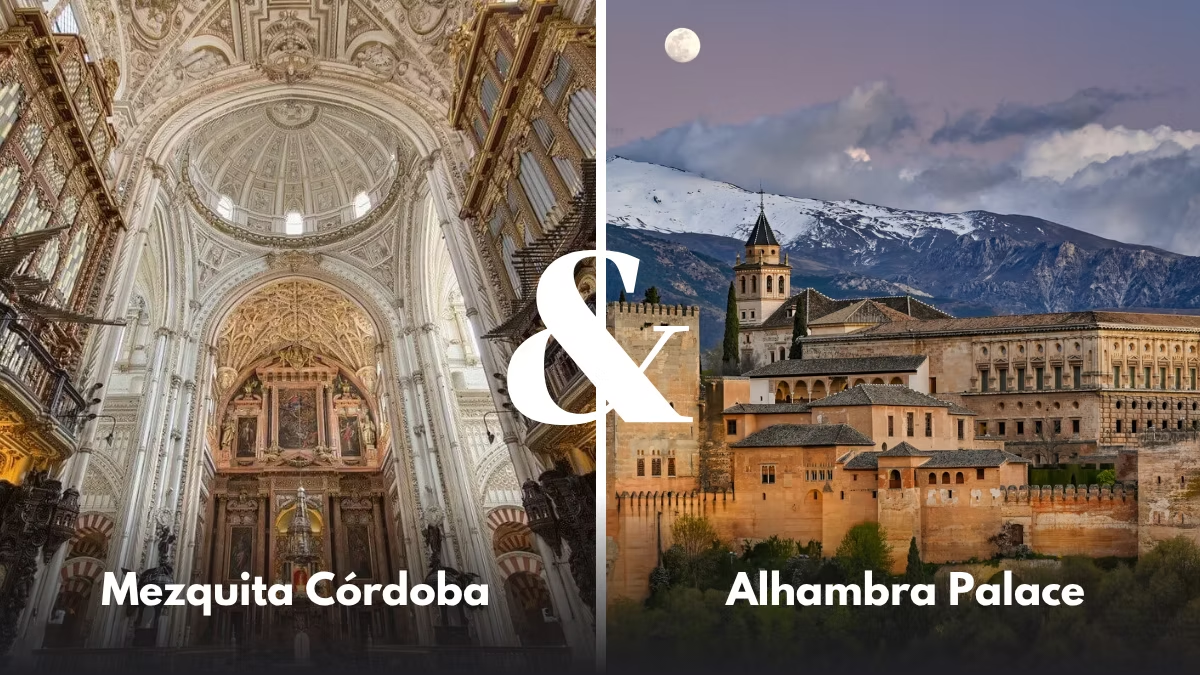
The Mezquita and the Alhambra are both UNESCO World Heritage Sites representing the peak of Islamic civilisation in Spain — but they are entirely different kinds of places. The Mezquita is a mosque (and cathedral) in a compact city, built in the 8th–10th centuries. The Alhambra is a palace complex on a hilltop, built in the 13th–14th centuries. Both deserve a visit. If forced to choose, the Mezquita is the more accessible half-day experience; the Alhambra requires a full day. Together they tell the complete story of Al-Andalus.
“Which is better — the Mezquita or the Alhambra?” is one of the most common questions from visitors planning an Andalusia itinerary. The honest answer is that the question is slightly wrong. They are not alternatives to each other in the way that, say, two cathedrals in the same city might be. They represent different periods, different building types, and different aspects of the same civilisation. This guide helps you understand what each offers and how to see both.
At a Glance
| Mezquita-Córdoba | Alhambra (Granada) | |
|---|---|---|
| Type | Mosque-Cathedral | Palace and fortress complex |
| Built | 784–988 (mosque); 1523 (cathedral) | 13th–14th century (Nasrid palaces) |
| Dynasty | Umayyad Caliphate of Córdoba | Nasrid Sultanate of Granada |
| City | Córdoba (flat, compact) | Granada (hilltop, sprawling) |
| UNESCO | 1984 | 1984 |
| Visit duration | 1.5–2 hours (half day) | 3–4 hours minimum (full day) |
| Advance booking | Recommended | Essential (sells out weeks/months ahead) |
| Standard price | €13 | €14–19 (depending on ticket type) |
| Free entry | Mon–Sat 08:30–09:20 | No free entry for tourists |
| Night visit | Yes (Soul of Córdoba, €20) | Limited availability |
The Historical Relationship
Understanding the relationship between these two monuments makes visiting both far more meaningful.
The Mezquita-Córdoba was built during the Umayyad Caliphate of Córdoba — the first great Islamic state on the Iberian Peninsula, which reached its peak in the 10th century. Córdoba was then the capital of Al-Andalus and the largest city in Europe. The mosque was the physical embodiment of that power.
The Alhambra was built four centuries later, during the Nasrid Sultanate of Granada — the last surviving Muslim kingdom in Iberia after the Christian Reconquista had progressively reclaimed territory from the north. By the time the Nasrid palaces were being built (13th–14th centuries), the Córdoba caliphate had long since fragmented. Granada was the final refuge.
The two monuments thus represent the beginning and the end of Al-Andalus — the caliphal moment of supreme confidence and the Nasrid moment of beautiful, melancholy twilight. The Mezquita projects power; the Alhambra projects refinement. Córdoba was the heart of an empire at its height; Granada was the last flower of a civilisation preparing, in some sense, to end.
Visiting both in the same trip — Córdoba first, then Granada, or vice versa — gives this history a physical shape. Most visitors who do so describe the combination as one of the most powerful cultural experiences in Europe.
Architecture — What Each Offers
The Mezquita is fundamentally about space and repetition. The prayer hall creates an experience of infinity through its 856 columns and the double arch system that multiplies above them. There is no single dominant visual focal point — the space extends in all directions equally, creating a disorienting sense of vastness that is unlike anything else in European architecture. The building is horizontal, austere in material (stone, brick, recycled columns), and physically overwhelming in scale.
The Alhambra is fundamentally about surface and enclosure. The Nasrid palaces use intimate courtyards, delicate stucco carving, complex geometric tile work, and muqarnas (stalactite vaulting) to create spaces of extraordinary sensory richness at a human scale. The famous Court of the Lions — its marble fountain surrounded by 124 slender columns — is the opposite of the Mezquita’s prayer hall: refined, jewel-like, precise. The Alhambra is also a hilltop fortress with dramatic views over Granada and the Sierra Nevada mountains.
Neither is better than the other. They are both masterpieces that happen to express completely different architectural values.
The Visiting Experience
Visiting the Mezquita is relatively straightforward. It sits in the middle of Córdoba’s compact historic centre, tickets are available online or at the door, the free morning entry window is a genuine and accessible option, and a thorough visit takes 90 minutes to 2 hours. The city around it — the Jewish Quarter, the Roman Bridge, the Calleja de las Flores — is easily explored on foot before or after. The building can be experienced comfortably as a half-day visit, even as part of a day trip from Seville or Málaga.
Visiting the Alhambra requires significantly more planning. The Nasrid Palaces — the most important section — must be booked in advance and tickets often sell out weeks or months ahead. The complex is large (over 14 hectares) and involves considerable walking, including uphill approaches from the city. A full visit covering the Nasrid Palaces, the Generalife gardens, the Alcazaba fortress, and the Palace of Charles V takes a full day. Córdoba can be visited as a day trip; the Alhambra is difficult to do justice to without at least a full day in Granada.
Which Should You Visit If You Can Only Choose One?
The honest answer is that this is a false choice for most visitors — both cities are served by excellent train connections and within easy reach of each other and of Seville. Most Andalusia itineraries of five days or more can accommodate both.
If genuinely forced to choose:
Choose the Mezquita if you have limited time in Andalusia, are based in Seville, are interested in Islamic architecture and history more than palace interiors and gardens, or prefer a half-day monument experience to a full-day site.
Choose the Alhambra if you are based in Granada, have a full day available, are drawn to refined decorative arts and the Nasrid period specifically, or want the combination of architectural beauty and natural landscape (the Sierra Nevada views are extraordinary).
Combine both if your itinerary allows — the two monuments together constitute one of the most coherent and moving cultural experiences in Europe, telling the complete story of Al-Andalus from beginning to end.
How to See Both on an Andalusia Trip
The most practical combined itinerary:
Day 1 — Córdoba: Arrive by AVE from Seville (42 minutes) or Madrid (1h45). Morning free entry at the Mezquita (08:30) or first paid slot (09:30). Bell Tower at 10:00. Jewish Quarter walk, Córdoba Synagogue, lunch. Return to Seville or continue to Granada.
Day 2 — Granada (Alhambra): Pre-book Nasrid Palaces tickets months in advance (this is not an exaggeration — they genuinely sell out). Full day at the Alhambra: Nasrid Palaces, Generalife, Alcazaba. Evening in Granada’s Albaicín or Sacromonte.
The From Granada: Córdoba & Mezquita day trip offers a guided option for visitors based in Granada who want to add the Mezquita to their itinerary without the logistics of independent travel.
Frequently Asked Questions
Is the Mezquita or the Alhambra more impressive?
They are impressive in entirely different ways. The Mezquita overwhelms with scale and spatial disorientation; the Alhambra astonishes with intimate refinement and decorative richness. Most visitors who see both rate the experience of the two together as more powerful than either alone.
Do I need to book the Alhambra in advance?
Yes — and well in advance. The Nasrid Palaces tickets for the Alhambra are strictly limited and sell out months ahead in peak season. Book as soon as your dates are confirmed.
Does the Mezquita sell out?
Not typically. Pre-booking is recommended in peak season to avoid queuing at the ticket office, but the Mezquita very rarely reaches full capacity in the way the Alhambra does.
How far apart are Córdoba and Granada?
Approximately 165 km by road. By train, there are direct connections taking approximately 1.5–2 hours. A day trip between the two cities is practical.
Can I visit both on the same day?
Not comfortably. Each deserves dedicated time. A day trip from Granada to Córdoba (or vice versa) gives you half a day at the destination monument, which is enough for the Mezquita but insufficient for the Alhambra.
Which was built first?
The Mezquita, by several centuries. The original mosque was built in 784. The Nasrid palaces of the Alhambra were built primarily in the 13th and 14th centuries.
Are both UNESCO World Heritage Sites?
Yes. Both were declared UNESCO World Heritage Sites in 1984.
Which is better for children?
Both work well for children with appropriate preparation. The Mezquita’s forest of columns is visually captivating for all ages. The Alhambra’s scale and variety — including the gardens and the fortress — tend to hold children’s attention well across a full day.
