
Best Time to Visit the Mezquita
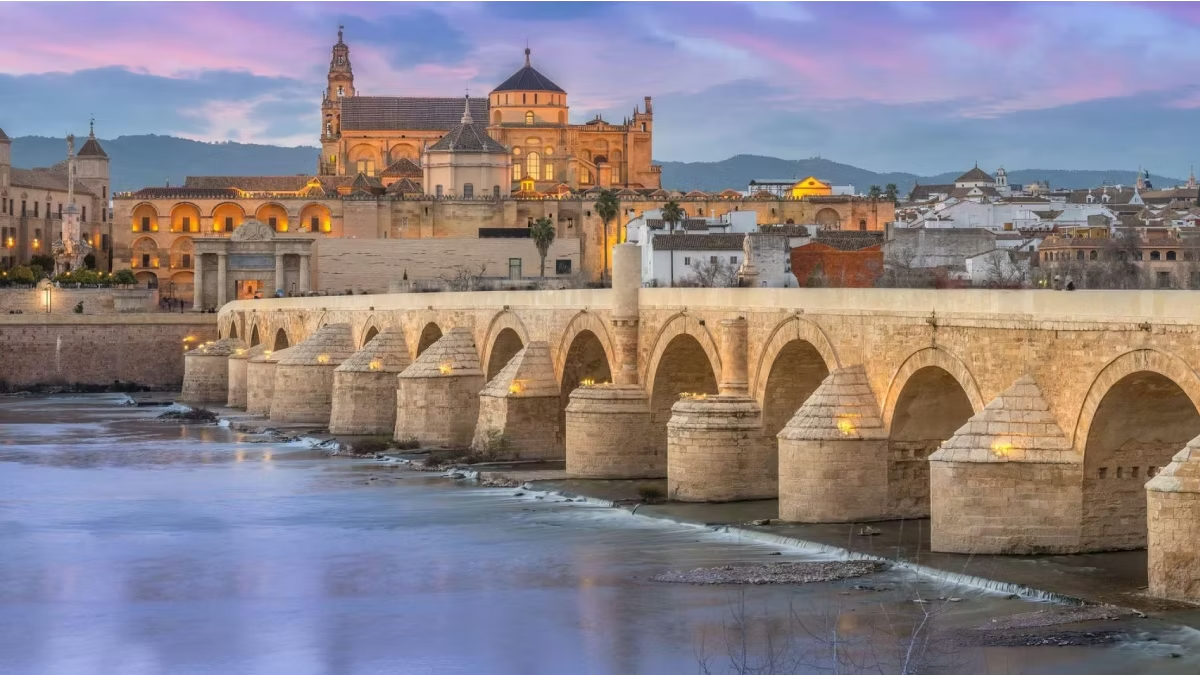
The best months to visit the Mezquita are October, November, March, and early April — comfortable temperatures, manageable crowds, and lower prices. Within any given day, the best times are 09:30–10:30 (first paid slots, before day-trippers arrive) or 16:30–17:30 (after most tour groups have departed). Avoid 11:00–15:00 in any season — this is when the building is at its most crowded.
Getting the timing right at the Mezquita makes a genuine difference to the experience. The difference between visiting at 09:30 on a Tuesday in October and at 13:00 on a Saturday in August is not just comfort — it is the difference between a contemplative encounter with one of the world’s great buildings and a noisy, crowded shuffle through it. This guide covers every timing consideration so you can plan with confidence.
Best Months to Visit
October–November and March–early April are the sweet spot — pleasant temperatures (18–25°C), manageable crowds outside festival weeks, and no extreme heat. January–February is the quietest period with the smallest crowds. Avoid July–August unless you are specifically prepared for extreme heat.
Spring (March–May) — Beautiful but Busy
Spring is Córdoba’s most atmospheric season and also its most crowded. Temperatures are ideal (18–27°C), the city is at its most beautiful, and there are two major festivals that make May in particular a special time to visit — but also an extremely busy one.
Semana Santa (Holy Week, 2026: 29 March – 5 April) brings enormous numbers of visitors to the entire region. The Mezquita may have altered hours around key liturgical events. Book tickets well in advance.
Festival de los Patios (2026: 4–17 May) is one of the most distinctive events in Andalusia — dozens of private courtyards across the city are opened to the public and compete for the best patio prize. If you want to combine the Mezquita with the patios festival, May is magical. But expect the city to be at peak capacity and tickets to sell out fast.
Late March and early April (outside Holy Week) are among the best times of year — warm, sunny, and less crowded than May.
Summer (June–August) — Hot and Quieter Than You’d Expect
Córdoba holds the record for the highest temperatures in mainland Europe. In July and August, daytime temperatures regularly exceed 40°C. The Mezquita itself has no air conditioning. Heat inside the stone building in summer is significant.
The counterintuitive reality: summer is not as crowded at the Mezquita as spring, because the extreme heat deters many visitors. July and August actually see lower visitor numbers than May. If you must visit in summer, an early morning slot (09:30–10:30) or the free entry window at 08:30 is essential — both for comfort and for crowds.
The Mezquita by Night is a particularly appealing summer option, offering the building in cooler evening conditions.
Autumn (September–October) — The Best Kept Secret
September and October are consistently described by experienced visitors as the best time to see the Mezquita. Temperatures are comfortable (22–28°C in September, 18–24°C in October), the summer crowds have thinned, and the building is at its most serene. October in particular is ideal — tourism drops significantly after the school holidays end, accommodation prices fall, and the city has a calmer, more local atmosphere.
Winter (November–February) — Quietest and Most Affordable
Winter in Córdoba is mild by most European standards (15–20°C daytime, 5–9°C at night) and genuinely pleasant for sightseeing. January and February are the months with the fewest visitors, the shortest queues, and the lowest prices. The Mezquita in winter has a quiet, almost contemplative quality that peak-season visits cannot replicate.
The trade-off: opening hours are shorter (10:00–18:00), the days are shorter, and some travel connections from the coast or other cities are less frequent. But for visitors who can tolerate cool evenings and overcast days, winter is an underrated time to visit.
Best Days of the Week
Tuesday, Wednesday, and Thursday are the quietest weekdays. Weekends — particularly Saturdays — are the busiest days, especially in high season when large tour groups from Seville, Granada, and Málaga converge on Córdoba.
Sunday is complicated. The opening hours are restricted (see our opening hours guide), the morning session clears early for mass, and the building tends to be busy in the limited afternoon window. If you have flexibility, Sunday is the day to avoid.
Best Time of Day
09:30–10:30 (first paid slots, before day-trippers arrive) and 16:30–17:30 (after most tour buses have left) are the two quietest windows for paid visits. The absolute quietest paid experience is the very first slot at 09:30.
Early Morning (09:30–10:30)
The first paid entry of the day is the quietest slot. Day-trippers from other Andalusian cities — the majority of visitors — do not arrive until 10:30–11:00 at the earliest. Visiting at 09:30 gives you the prayer hall almost to yourself for the first 30–45 minutes, with the morning light angling through the windows in a way that later visits cannot match.
The free entry window at 08:30 is even quieter in theory, but comes with the limitation that the cathedral section is being set up for mass and may be partially inaccessible. See our free entry guide for how to combine the two.
Peak Hours — Avoid (10:30–15:00)
This is when the building is at its most crowded. Multiple day-trip tour buses from Seville, Granada, and Málaga arrive simultaneously, creating a confluence of 10–15 guided groups all moving through the same spaces. The acoustic overlap between competing guide systems, the queues to see the mihrab, and the general crowding make this the least rewarding time to visit. If you arrive with a pre-booked timed ticket and skip the queue, you still share the interior with everyone else.
Late Afternoon (16:00–17:30)
Most group tours finish by 16:00. From around 16:30 onwards, the Mezquita becomes noticeably quieter and the golden afternoon light in the prayer hall is among the most beautiful it gets. Many experienced visitors who have been multiple times nominate late afternoon as their preferred time. The closing time (19:00 in summer, 18:00 in winter) gives 90–120 minutes of relatively uncrowded access.
Photography Considerations
The Mezquita’s interior light is most dramatic in the early morning (09:30–11:00), when low sun angles through the clerestory windows and creates long shadows between the columns. The late afternoon (16:30–18:00) produces warmer, more orange light that photographs beautifully. Midday light is flat and uninspiring from a photography perspective, in addition to being the busiest period.
Tripods are not permitted inside the Mezquita. Photography during mass or religious ceremonies is also prohibited.
Combining with the Night Tour
If you are staying overnight in Córdoba and want the most complete experience of the Mezquita, a combination visit — early morning entry at 08:30 for the free window (quietest conditions, best for atmosphere) followed by the Soul of Córdoba night tour in the evening — gives you two entirely different versions of the same building in a single day. Many visitors who have done this describe it as the definitive Mezquita experience.
Frequently Asked Questions
When is the Mezquita least crowded?
January and February are the least crowded months. Within any day, 09:30–10:30 and 16:30–17:30 are the quietest paid entry windows. The free morning slot at 08:30 is also very quiet on weekdays outside peak season.
What is the best month to visit the Mezquita?
October is widely considered the best month — comfortable temperatures, significantly reduced crowds compared to spring and summer, and a pleasant city atmosphere. Early April (outside Holy Week) and November are also excellent.
Is the Mezquita worth visiting in summer?
Yes, but with important caveats. Córdoba can exceed 40°C in July and August, and the Mezquita has no air conditioning. An early morning visit (09:30 or the free 08:30 slot) is essential in summer. The night tour is particularly appealing in hot weather.
What day of the week is the Mezquita busiest?
Saturday is consistently the busiest day. Sunday is restricted by the religious service schedule. Tuesday through Thursday are the quietest weekdays.
Is May a good time to visit despite the crowds?
If you can book well in advance and are interested in the Patios Festival alongside the Mezquita, May is magical. Outside of the festival week (typically first two weeks of May), crowds are heavy but manageable with an early morning timed ticket.
Does the time of day affect the light inside the Mezquita?
Significantly. Early morning light creates dramatic shadows between the columns. Late afternoon produces warm golden tones. Midday light is flat. For photography, early morning or late afternoon visits are strongly recommended.
How far in advance should I book during peak season?
During Easter week, the Patios Festival (May), and the July–August summer peak, book at least 2–3 weeks ahead for the specific time slot you want. For shoulder season visits, 3–7 days is usually sufficient online.
Is it better to visit before or after the Alhambra?
Either works well — they are complementary rather than competing experiences. If combining both in an Andalusia itinerary, consider visiting Córdoba first to understand the earlier phase of Al-Andalus before Granada and the Alhambra. Our Mezquita vs Alhambra guide covers the historical relationship in depth.
