
The Cathedral within the Mosque
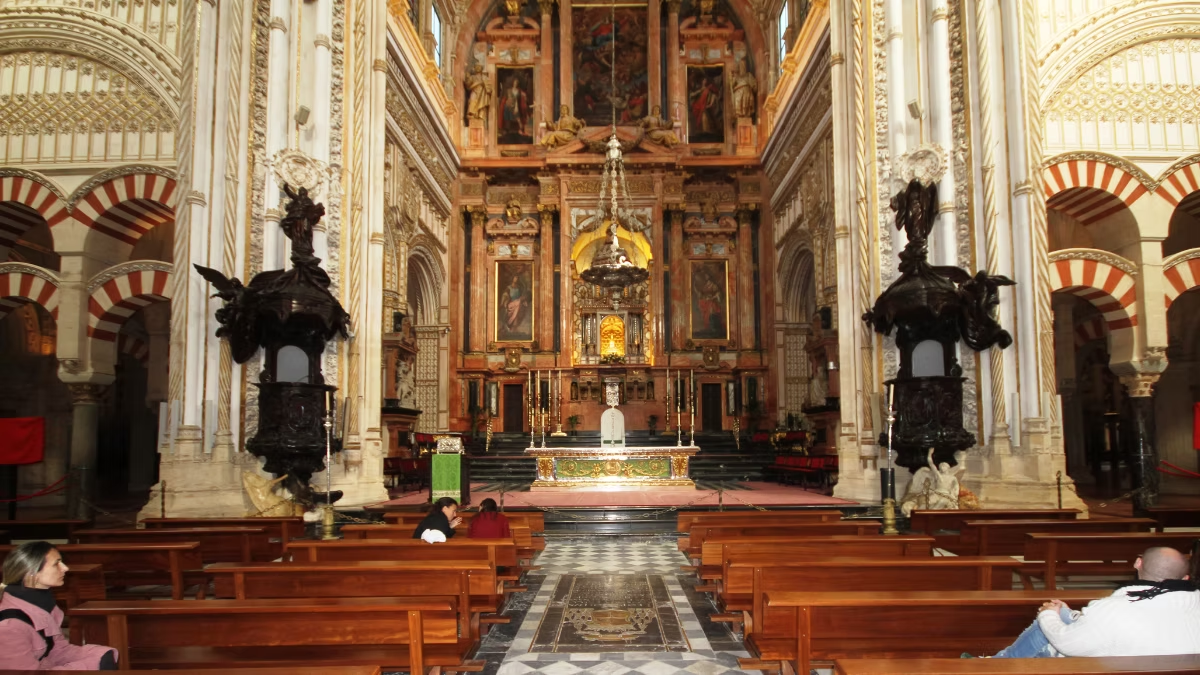
In 1523, Holy Roman Emperor Charles V granted permission to build a full Renaissance cathedral nave — the Capilla Mayor and Coro — inside the prayer hall of the Mezquita. It required demolishing approximately 60 columns. The cathedral is Gothic and Baroque in style, featuring soaring vaulted ceilings, a Baroque altarpiece, and carved mahogany choir stalls. Charles V is reported to have said on seeing it: “You have destroyed something unique to build something ordinary.”
No element of the Mezquita-Córdoba is more debated or more visually arresting than the cathedral inserted into its heart. It is at once an architectural intrusion and a magnificent building in its own right — and the friction between the two is part of what makes the Mezquita an experience that stays with visitors long after they leave. This guide covers what the cathedral is, what to look for inside it, and why it matters.
How the Cathedral Came to Be Inside the Mosque
When Córdoba fell to Ferdinand III in 1236, the mosque was immediately converted to Catholic use, but this early conversion was relatively conservative. Chapels were added around the perimeter walls, but the central prayer hall — the forest of columns and arches — was largely preserved, with Christian altars and furnishings placed within the existing Islamic structure.
This changed in 1523 when the cathedral chapter petitioned Holy Roman Emperor Charles V for permission to build a proper cathedral nave at the centre of the prayer hall. The city council of Córdoba opposed the plan, reportedly warning Charles that destroying part of the mosque to build the cathedral would erase something the world could not replace. Charles approved the petition regardless.
Construction began in 1523 under architect Hernán Ruiz the Elder and continued through the 16th and 17th centuries. Approximately 60 columns were removed from the prayer hall to create the space. When Charles V visited the completed structure in 1526, the account most often cited records him saying: “You have destroyed something unique to build something ordinary. What you have built can be found anywhere. What you have destroyed is found nowhere.”
Whether the words are precisely his or a later attribution, they express a sentiment that still resonates. The cathedral is genuinely impressive — but the mosque it was built inside is extraordinary, and the contrast is inescapable.
What the Cathedral Looks Like
The cathedral nave rises significantly above the surrounding prayer hall, its barrel vaults climbing to a height the mosque’s flat ceiling never reached. From anywhere in the prayer hall, the cathedral announces itself: a vertical Gothic intrusion cutting through the horizontal repetition of arches and columns.
The Capilla Mayor
The Capilla Mayor (Main Chapel) is the centrepiece of the cathedral. It is a late Gothic and early Renaissance space with a vaulted ceiling that combines Gothic ribbing with Renaissance decorative detail. The main altarpiece by Antonio Palomino dominates the east wall — a Baroque composition in gilded wood depicting scenes from the life of the Virgin Mary, to whom the cathedral is dedicated (officially the Cathedral of Our Lady of the Assumption).
The quality of the stone carving throughout the Capilla Mayor is exceptional. The transition between Gothic structure and Renaissance ornament — visible in the capitals, the tracery, and the ceiling bosses — makes this space a textbook example of the Plateresque style that characterised Spanish architecture in the early 16th century.
The Coro
Opposite the Capilla Mayor, the Coro (choir) occupies the nave between the altar and the west wall. It is enclosed by a high screen and filled with mahogany choir stalls — 109 of them, carved in the 18th century by Pedro Duque Cornejo over a period of several decades. These choir stalls are considered among the finest examples of Baroque woodcarving in Spain.
The individual seats are carved with scenes from the Old and New Testaments, portraits of saints, and decorative foliage. The detail is extraordinary and rewards close inspection. Binoculars are useful here — the upper choir stalls are above eye level and the carving at the top is difficult to see clearly without them.
The Transept
The cathedral’s transept crosses the nave at right angles. It was restored between 2006 and 2009 and is in excellent condition. The transept vaulting is particularly fine and offers clear views upward into the crossing dome.
The Surrounding Chapels
Along the outer walls of the prayer hall, dozens of side chapels were inserted over the course of the Christian period. The most notable is the Chapel of Santa Teresa (also known as the Treasury), in the southeast corner. It contains the cathedral’s collection of gold and silver liturgical objects, reliquaries, and artworks, including a custodial (monstrance) by Enrique de Arfe. The chapel itself has a fine Baroque dome.
The Villaviciosa Chapel near the northwest entrance is the oldest Christian space in the building — the first area converted for Catholic use after 1236 — and contains both Islamic architectural elements and early Gothic Christian additions overlaid on them. It is a compressed history of the building’s transformation in a single room.
The Controversy Then and Now
The debate about the cathedral’s presence within the mosque has never fully resolved. In the 20th century, campaigns to rename the building simply “the Mosque” were met with resistance from the Cabildo Catedral, which maintains that the building is and has been a functioning Catholic cathedral since 1236. In 2019, Córdoba’s then-mayor supported closing an investigation into the legal ownership of the building, affirming its status as a Catholic institution.
For visitors, the tension is part of the experience. The cathedral does not apologise for its presence, and neither does the mosque. They coexist in a state of architectural argument that has lasted 500 years and shows no sign of resolution.
Frequently Asked Questions
When was the cathedral built inside the Mezquita?
Construction began in 1523 under Holy Roman Emperor Charles V and continued through the 16th and 17th centuries.
Did Charles V regret building the cathedral inside the mosque?
He is reported to have said on visiting the completed nave in 1526: “You have destroyed something unique to build something ordinary.” The exact wording is disputed, but the sentiment appears in historical accounts.
How many columns were destroyed to build the cathedral?
Approximately 60 columns were removed from the prayer hall to create space for the cathedral nave.
What is the choir (Coro) made of?
The choir stalls are carved from mahogany by Pedro Duque Cornejo in the 18th century. There are 109 seats, each carved with biblical scenes and decorative detail.
Is the cathedral still used for religious services?
Yes. The Mezquita-Catedral is the active Catholic cathedral of the Diocese of Córdoba. Mass is held daily — Monday to Saturday at 09:30, Sunday at noon and 13:30.
Can I photograph inside the cathedral nave?
Yes, for personal use, without flash or tripods. Photography is not permitted during mass or other religious services.
What is the Chapel of Santa Teresa?
A Baroque chapel in the southeast corner of the building containing the cathedral’s treasury — gold and silver liturgical objects, reliquaries, and artworks from the Christian period.
